
Yes, use a per-song click routed to in-ear monitors, and start in rehearsal before you ever bring it to a live service. Build a simple three-song set, route the click to the drummer's or music director's in-ear, and let the band get comfortable before Sunday. A tool like Song7 can store that tempo and click setting with each song, so the whole band is working from the same setlist.
TL;DR:
- Routing the click solely to in-ear monitors, especially to the drummer or music director, prevents bleed into the house speakers and maintains a natural congregation experience.
- Storing per-song tempo, time signature, and count-in settings in the setlist ensures consistency, reduces guesswork, and streamlines rehearsal-to-service transition.
- Using softer click sounds like woodblocks or toms supports better feel and reduces mechanical perception, especially in slower, more emotional songs.
- Building the click into rehearsal gradually, starting with individual parts and progressing to full band, helps the team internalize timing without losing musical feel.
- Regular quick checks of routing and sync before each service catch common issues like latency or leak that can disrupt timing and musical flow.
Table of Contents
- Why use a metronome in worship: benefits and honest objections
- Live setup: routing the click and who should hear it
- Setlist workflow: saving tempos, count-ins, and team settings
- Choosing click sounds, subdivisions, and BPM strategies
- Rehearsal practices: training internal time without losing feel
- What volunteer teams get wrong about click tracks
- How Song7 fits into your click and setlist workflow
- Sources
- FAQ
Why use a metronome in worship: benefits and honest objections
A click does three things well. It keeps transitions tight between songs, so the band isn't guessing at tempo when you move from a quiet moment into a bridge. It gives new or volunteer musicians a steady reference while they're still building their internal sense of time. And it keeps the congregation's experience consistent week to week, since the groove doesn't drift because someone's nervous or excited.
The objection worship leaders raise most often is that a click makes the music feel robotic. That's a real risk, but it's a misuse problem, not a metronome problem. A click should guide the band's internal sense of time, not replace it. The goal is a team that could play the song accurately without the click, using it as a safety net rather than a leash.
A few situations call for leaving the click off entirely:
- Fully spontaneous or Spirit-led worship moments where tempo needs to breathe and shift freely.
- Very small acoustic gatherings where the room and instrumentation don't need tight synchronization.
- Services where only one or two musicians are playing, since the coordination problem a click solves mostly doesn't exist.
Live setup: routing the click and who should hear it
The click belongs in ears, not speakers. Sending it to the house mix is the single most common mistake teams make, and it's an easy one to avoid with the right routing.
- Decide who carries the click. The drummer is the natural choice because they set the pulse for everyone else. If there's no drummer, give it to the music director.
- Route the click to in-ear monitors only. In-ears isolate the sound far better than a wedge, which tends to leak into vocal mics and bleed toward the congregation.
- Never patch the click channel into front-of-house speakers. Confirm this on your mixer before every service, not just when the system is new.
- For smaller setups without a full in-ear rig, try a stereo headphone splitter off an aux send, or run a phone with a click app straight into an aux channel using a simple cable.
- Set click volume low enough that the drummer can still hear the band and the room. A click that's too loud causes fatigue over a long set and tends to flatten feel.
- Check latency and sync before doors open. Play through one full song with the click running to confirm everyone's monitor mix is locked in.
Pro Tip: Do a 30-second click check at the top of every rehearsal and every service, the same way you'd check a guitar tuning. It catches routing mistakes before they become a mid-song problem.
Our own guide to click tracks in worship covers monitor routing in more depth if your team is building an in-ear system from scratch.
Setlist workflow: saving tempos, count-ins, and team settings
A good setlist workflow means nobody has to remember or guess a tempo on Sunday morning. Store the following for every song:
- BPM and time signature, confirmed against the recording or chart you're using.
- Subdivision and accent pattern, so the drummer knows whether beat one gets emphasized or the click runs straight eighths.
- A count-in of two to four clicks before the first note, long enough to settle in without dragging the moment.
Order your setlist the way the service actually flows, including the quiet transitions and spoken moments between songs, not just the songs themselves. That way the tempo map matches what happens on stage, not just what happens musically.
Share the finished setlist so every band member opens the identical settings, whether that's a file export, an AirDrop, or a synced app like Song7, which keeps per-song tempo and click sound attached to the setlist itself. Before the service starts, run a short checklist: confirm volume levels in every in-ear mix, check for any delay between the click and what musicians hear, and verify every device is showing the same tempo for song one.

Choosing click sounds, subdivisions, and BPM strategies
Skip the harsh digital beep. A practitioner guide from Sound On Sound recommends experimenting with click timbres and subdivisions so the click supports feel instead of fighting it, and most worship teams land on a softer woodblock or tom sound for exactly that reason. It's easier to sit behind the beat without the sound jumping out at you.
Slow songs are where clicks feel most mechanical if you're not careful. Doubling the BPM, so a 60 BPM ballad runs as a 120 BPM click with eighth notes, gives musicians a denser pulse to lock onto without changing how the song actually sounds.
- Use accent beats on count one to mark song sections and cue transitions without anyone needing to shout a number.
- Reserve subdivisions for slower tempos where a single click per beat leaves too much space to drift.
- Save straight quarter-note clicks for uptempo songs, where the pulse is already dense enough to follow.
Most congregational worship songs sit in a moderate tempo range, while uptempo set-openers run faster, and the right click sound keeps either feel intact rather than flattening it. (Sound On Sound)
Rehearsal practices: training internal time without losing feel
Build the click into rehearsal gradually instead of dropping it on the band cold.
- Start with individual parts against the click, letting each musician find the pulse alone before anyone plays together.
- Move to full band with the click running, focusing on transitions and count-ins where timing tends to slip.
- Finish by running the set without the click to check whether the band's internal time actually held. If it drifted, that song needs another rehearsal pass with the click back in.
A few drills help this stick. Practice subdivision locking by having the drummer tap eighth notes against a quarter-note click. Run half-time and double-time passes on the same song so the band feels both options. Rehearse transitions and count-ins specifically, since that's where most live mistakes happen, not in the middle of a verse.
When onboarding volunteers, keep it short. Show them one song with the click, explain why it's there, and let them feel the benefit before adding a second. Pro Tip: A band is ready to reduce in-ear reliance when they can play a full song without the click and land within a beat or two of where they started. Our 90-minute rehearsal plan lays out a timeboxed structure that fits click training into a volunteer schedule.
What volunteer teams get wrong about click tracks
Most volunteer worship teams don't have the luxury of hours of practice time, so the tools and habits they adopt need to be simple enough to stick without a learning curve. The biggest pitfall we see isn't bad timing. It's teams skipping the routing check and discovering mid-service that the click leaked into the house mix, or that one musician's in-ear was running a different tempo than everyone else's.
The fix is rarely a bigger investment. It's a small, consistent rehearsal habit, the kind of 30-second check mentioned earlier, repeated until nobody has to think about it. Teams that build that habit see the payoff almost immediately in how clean their transitions feel on a Sunday morning.
— Editorial team
How Song7 fits into your click and setlist workflow
Once your team has a routing plan and a rehearsal rhythm down, the next step is making sure those settings travel with the setlist instead of living in someone's head. 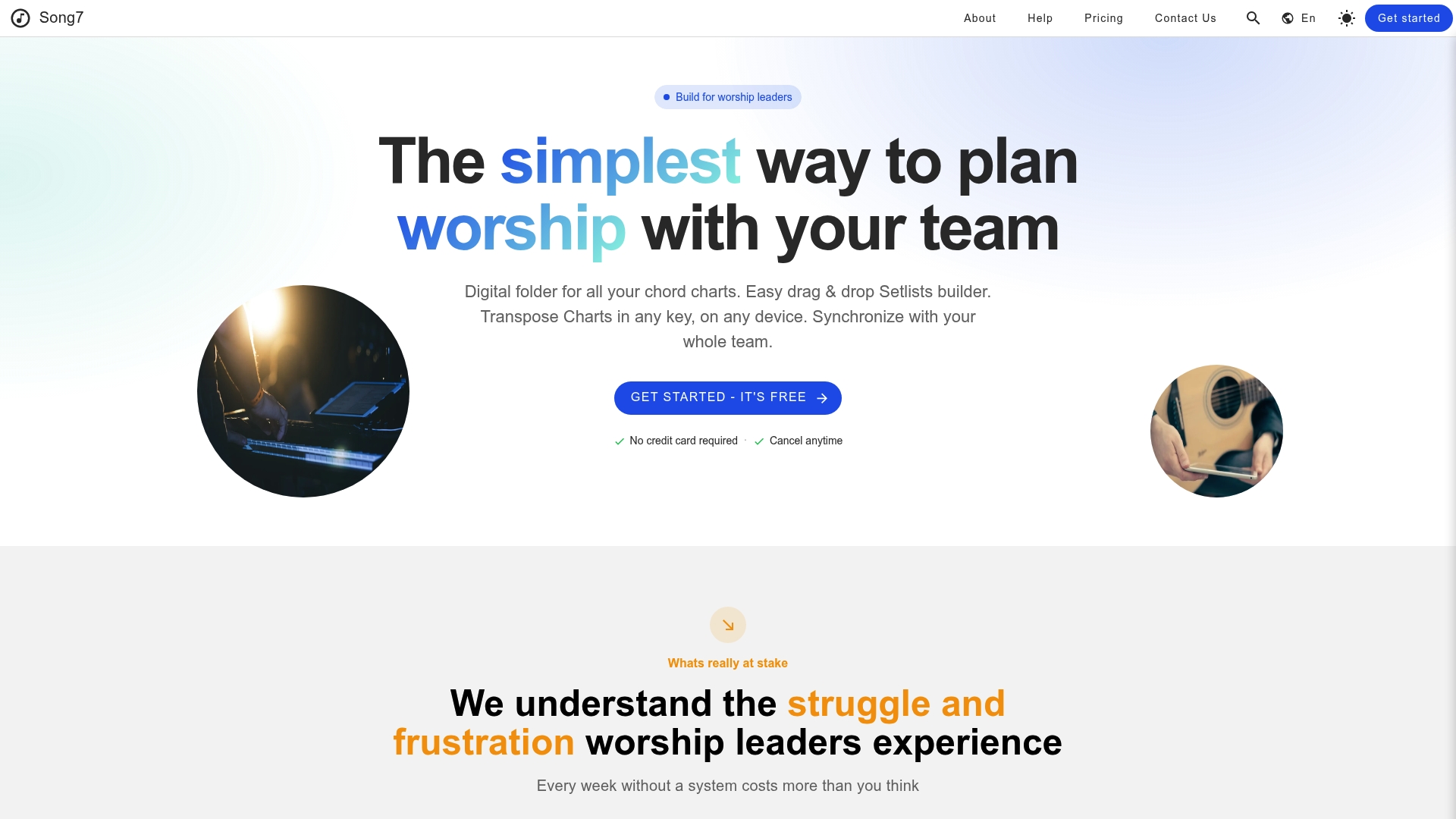
That's the gap Song7 is built to close. It stores per-song tempo, time signature, and click settings right inside the setlist, so the metronome setup you rehearsed on Tuesday is the same one loaded on Sunday morning. Features that line up directly with the workflows above include:
- A built-in metronome with per-song tempo storage, so nobody retypes a BPM before each song.
- Drag-and-drop setlist building that keeps songs, chord charts, and click settings together.
- Real-time team sync, so when a volunteer opens the setlist on their own device, they see identical tempo and click settings.
- Presentation mode for lyrics and chords alongside the same setlist your band is playing from.
Start by building a three-song set, syncing it to one volunteer's device, and running a pre-service check to confirm tempos and click sounds match across every phone or tablet on stage. You can try Song7 directly to see whether that workflow fits your team's Sunday routine.
Sources
FAQ
What is the best metronome app for worship?
There's no single answer, since teams prioritize different features, but the strongest options store per-song tempo and click settings inside a shareable setlist. Apps like Worship Metronome and Stage Metronome build around that setlist-first approach, and Song7 offers a built-in metronome alongside full setlist and chord chart management for teams that want everything in one place.
What BPM are most worship songs?
Worship song tempos vary widely depending on the song's energy and purpose in the set, from slower reflective pieces to faster opening or closing songs. Rather than targeting a fixed number, confirm the BPM against the recording or chart your team is using and store it with the setlist so it's consistent every time the song is played.
Where can I find free click tracks for worship?
Many metronome apps, including browser-based tools like Song7's free online metronome, let you set a tempo, subdivision, and click sound at no cost. These work well for individual practice or small rehearsals, though a full live service setup still needs proper in-ear routing.
Can you use a metronome for singing?
Yes, vocalists can rehearse with a metronome to build timing awareness, though most teams route the audible click to instrumentalists like the drummer rather than singers during a live service. Practicing lead and background vocal parts against a click during rehearsal helps lock in phrasing before the full band plays together.