
Build your service around a simple four-part arc, keep a rotating core of about 60 songs, and schedule volunteers at least a month ahead. That single combination, backed by Song7 and the Calvin Institute of Christian Worship, solves most of the chaos small teams fight every week. Start this week by picking your service arc and locking in next month's volunteer roster.
TL;DR:
- Maintaining a four-part worship arc of gathering, word, response, and sending streamlines planning and prevents stacking songs before Scripture has been read.
- Keeping around 60 songs in rotation, tagged by style and familiarity, balances variety and avoids worship fatigue or stagnation.
- Scheduling volunteers one to three months ahead with clear roles and built-in rest reduces burnout and improves consistency.
- Using backing tracks, split tracks, and simple contingency plans allows worship to proceed smoothly even with limited musicians or technical issues.
- Incorporating non-musical elements like scripture readings, silence, and testimonies enhances participation without requiring additional team members or budget.
Table of Contents
- What Is the Best Way to Plan Worship for a Small Church?
- How Many Songs Should a Small Church Keep in Rotation?
- How Far Ahead Should You Schedule Worship Volunteers?
- What If You Do Not Have Enough Musicians?
- How Do You Run a Rehearsal in 90 Minutes or Less?
- What Does a Realistic Weekly Planning Calendar Look Like?
- How Do You Connect Song Choices to the Sermon?
- How Do You Communicate Clearly With Volunteer Teams?
- How Can Small Churches Add Worship Elements Beyond Music?
- How Do You Evaluate and Improve Worship Services Over Time?
- How Do You Adapt Worship Planning for Different Room Sizes?
- How Should Small Churches Use Multimedia and Signage?
- A Practitioner's Take on Familiarity, Novelty, and Prayer
- How Song7 Helps You Put This Plan Into Action
- Sources
- FAQ
What Is the Best Way to Plan Worship for a Small Church?
Small church worship planning works best when you stop reinventing the service every week and start using a repeatable arc. Most healthy small-church services follow four movements: gathering, word, response, and sending. Each one has a job to do, and once your team knows the shape, planning gets faster every single week.
- Gathering welcomes people in and settles hearts. One or two songs, a welcome, maybe a call to worship.
- Word centers the sermon and Scripture reading. This is the theological anchor for everything else you plan.
- Response gives the congregation a chance to react to what they just heard. Communion, a response song, silent reflection, or prayer often lives here.
- Sending closes the service with a commissioning song or benediction that pushes people back out the door with purpose.
Place two to four songs across the arc rather than clustering them all up front. A common mistake is stacking three songs before anyone has heard a word of Scripture, which front-loads energy the sermon then has to compete against.
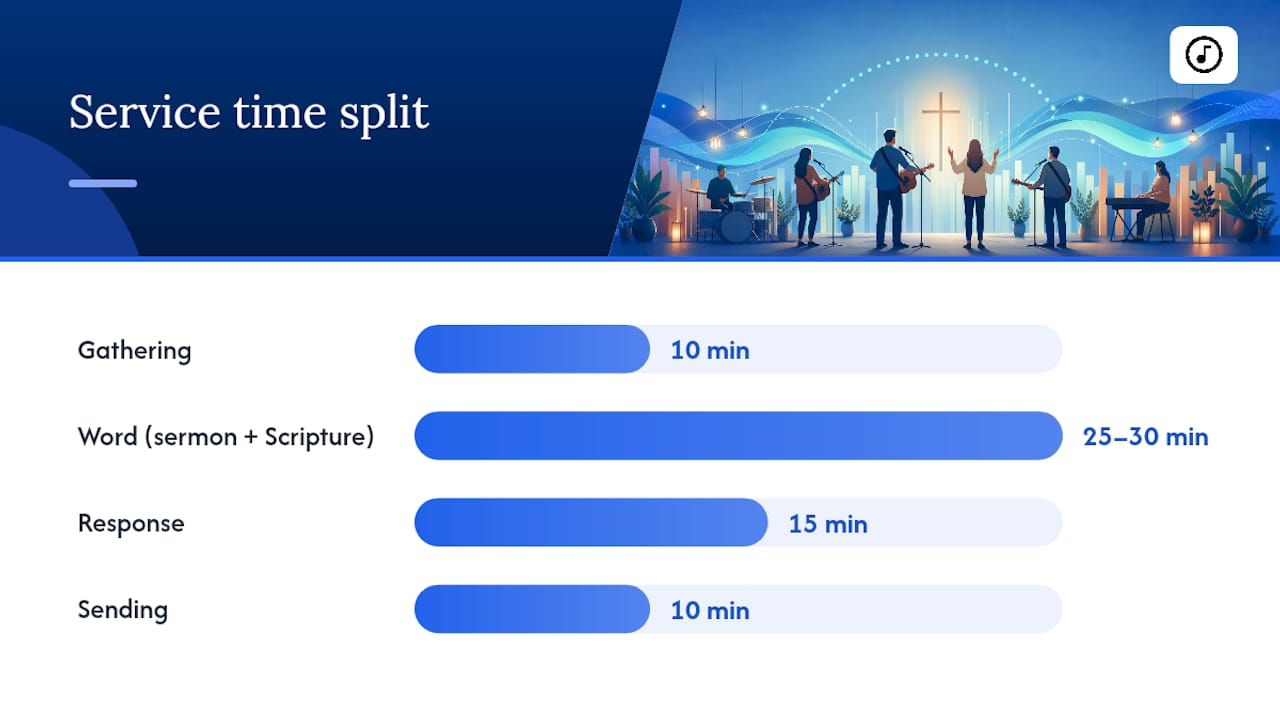
When you introduce something new, follow a preview, teach, repeat cadence: play it as a instrumental one week, teach it briefly the next, then repeat it for two or three more Sundays before it joins the rotation. For a 60 to 75 minute service, a workable split looks like 10 minutes gathering, 25 to 30 minutes word, 15 minutes response, and 10 minutes sending. That leaves buffer room for announcements or a longer sermon without blowing the whole service past an hour and a half.
How Many Songs Should a Small Church Keep in Rotation?
Around 60 songs a year, cycling through on a rotating basis, is the number that keeps a congregation confident without boring them. Guidance from Equip the Called points to this revolving core as the sweet spot between stagnation and constant relearning. Introduce too many new songs and your congregation spends more energy decoding lyrics than actually worshipping. Introduce too few and worship starts to feel stale.
A simple tagging system turns your song library from a pile into a tool. Tag each song by:
- Vocal range (so you know who can lead it)
- Familiarity level (new, learning, or core)
- Tempo (fast, moderate, slow)
- Theological fit (lament, celebration, communion, sending)
Building an organized song library with these tags means you can search for "slow, communion, core" in seconds instead of scrolling through a binder trying to remember what you sang last Easter.
Pro Tip: Teach a new song in one rehearsal by stripping it down to just the chorus first. Have the team sing it through three times with no instruments before adding accompaniment. Muscle memory for the melody sticks faster than most leaders expect, and it saves you from burning your entire rehearsal on one unfamiliar song.
How Far Ahead Should You Schedule Worship Volunteers?
Plan your volunteer rotation one to three months out, never week to week. Research on small church scheduling is specific on this point: a predictable schedule with clear roles is one of the biggest levers against volunteer burnout. Scrambling for a bass player on Thursday night for Sunday's service is exhausting for you and unfair to them.
- Build a rotation grid. List every role (vocals, guitar, drums, tech, greeters, readers) across four to six Sundays and fill it in one sitting instead of piecemeal.
- Schedule Sundays off on purpose. Every volunteer needs a break built in, not one they have to ask for.
- Train non-musical roles lightly. A reader or a slide operator does not need a rehearsal, just a 10-minute walkthrough of the run sheet and their cues.
- Watch for burnout red flags. Chronic lateness, declining energy, or last-minute cancellations usually mean someone is overextended, not unreliable.
- Redistribute immediately when you see it. Recruit a backup, split a heavy role in two, or rotate someone out for a season rather than waiting for them to quit.
Small-church advantages of the community and flexibility that come with a smaller team also mean burnout hits harder and faster when one person is doing three jobs. Fix the rotation before it becomes a resignation.
What If You Do Not Have Enough Musicians?
A missing guitarist should not cancel your worship set. Split tracks and backing tracks let a single worship leader carry a full-sounding service even with one microphone and a laptop. The guideline on leading worship in smaller churches specifically recommends split-track audio as a legitimate substitute when live instrumentalists are not available, not a fallback to be embarrassed about.
Build a simple contingency plan before you need it:
- Leader plus backing track when only vocals show up.
- A cappella with the congregation carrying melody when technology fails mid-service.
- Lyric slides with no music at all for a stripped-down, reflective moment that still works. (Use split-track audio as a legitimate substitute when live instrumentalists aren’t available.)
Store everything in one shared cloud folder with consistent file names, something like 2026-03-15_AmazingGrace_key-G, so nobody is hunting through five different folders on Sunday morning trying to find the right backing track. For mix and loudness reference points on backing tracks, AubioMix's worship benchmarks offer a useful comparison so your recorded tracks do not overpower or underwhelm the room.
How Do You Run a Rehearsal in 90 Minutes or Less?
A focused 90-minute rehearsal beats a sprawling two-hour one every time, because volunteers stay sharp instead of fatigued. Practical rehearsal guidance built for volunteer teams centers on three priorities: nail the transitions, work one new song, and make every cue crystal clear.
- Minutes 0 to 10: Warm up and confirm the set order.
- Minutes 10 to 30: Run the new song only, isolated from the rest of the set.
- Minutes 30 to 60: Run the full set start to finish, focusing on transitions between songs and into spoken elements.
- Minutes 60 to 80: Fix trouble spots identified in the run through.
- Minutes 80 to 90: Walk the run sheet aloud one more time so every cue is fresh.
Your Sunday run sheet should list the item, start time, leader cue, tech cue, scripture reference, and a one-line transition script for whoever is speaking between songs.
| Run sheet field | Purpose |
|---|---|
| Item and start time | Keeps the service on pace without a clock-watcher |
| Leader cue | Tells the vocalist or leader exactly when to step in |
| Tech cue | Signals slide changes or audio triggers |
| Scripture reference | Anchors readings to the sermon text |
| Transition script | One line bridging song to speaking, or speaking to song |
A copyable run sheet template built specifically for volunteer teams saves you from building this structure from scratch every week.
What Does a Realistic Weekly Planning Calendar Look Like?
Most small-church chaos happens not because leaders lack vision, but because nobody owns the weekly tasks. A lightweight checklist fixes that fast.
Weekly rhythm:
- Monday: Confirm the sermon text and theme with the pastor.
- Tuesday: Select songs that match the text; update the setlist.
- Wednesday: Build slides and confirm scripture references.
- Thursday: Send the run sheet and setlist to volunteers.
- Friday or Saturday: Rehearse.
- Sunday: Run the service, then jot quick notes for next time.
Monthly rhythm:
- Review your repertoire tags and retire songs that are not landing.
- Build the volunteer roster for the coming month.
- Run a short training session for one new skill (a tech cue, a harmony part, a reading style).
- Plan any seasonal or thematic series in advance so song selection has direction.
Centralized tools remove a lot of friction here. A platform like Song7 syncs setlist changes to every volunteer's phone instantly, so nobody shows up Sunday with last week's chord chart. That single change, distributing files automatically instead of manually, eliminates one of the most common Sunday morning scrambles.
How Do You Connect Song Choices to the Sermon?
Music that ignores the sermon text feels disjointed, no matter how well it is played. The Calvin Institute's planning process frames this with three simple questions worth asking every single week: What does the text actually say? How should the sermon shape the songs you choose? What transitions will carry the emotional and theological focus from one moment to the next?
Start your planning meeting with the sermon passage, not the song list. If the pastor is preaching on lament from the Psalms, opening with three upbeat celebration songs works against the text rather than with it. Read the passage together as a team before picking a single song.
Ask a fourth question too: where does this text want the congregation to land emotionally by the end of the service? A sermon on grace probably wants to end in response and gratitude, not just close abruptly after the last point. That target shapes whether your closing song is quiet and reflective or full and declarative.
This is also where non-musical elements earn their place. A moment of silence after a heavy sermon can do more theological work than a song ever could. Building that alignment takes maybe 15 extra minutes in your planning meeting, and it is the difference between a service that flows and one that feels like two unrelated events stitched together.
How Do You Communicate Clearly With Volunteer Teams?
Vague expectations are the number one reason volunteers quit quietly instead of raising a concern. Fix that with role clarity stated in writing, not just implied. Every volunteer should know exactly what they are responsible for, when to show up, and who to ask when something is unclear.
Assign roles by interest and ministry identity as much as technical skill. A retired teacher with no musical background might be your best Scripture reader. A quiet teenager who is nervous singing might thrive running slides instead. Match people to roles that fit who they are, not just what slot needs filling.
Build a simple feedback loop into your rhythm. A two-minute debrief after rehearsal, or a quick text thread after Sunday, gives volunteers a low-pressure way to flag what is not working. Silence is not the same as satisfaction; it usually means people do not feel safe raising issues, or nobody ever asked.
Set expectations once and repeat them consistently: arrival time, dress or appearance norms if you have them, what to do if they need to cancel, and who covers for them. Clear roles paired with a predictable rotation, which reduces burnout far more reliably than passion or good intentions alone, are what keep volunteers serving for years instead of months.
How Can Small Churches Add Worship Elements Beyond Music?
Worship is not exclusively musical, and leaning too hard on songs puts unnecessary pressure on a small team that may only have two or three musicians on a given Sunday. Incorporating non-musical elements such as Scripture readings, silence, and testimonies adds depth without requiring a bigger band.
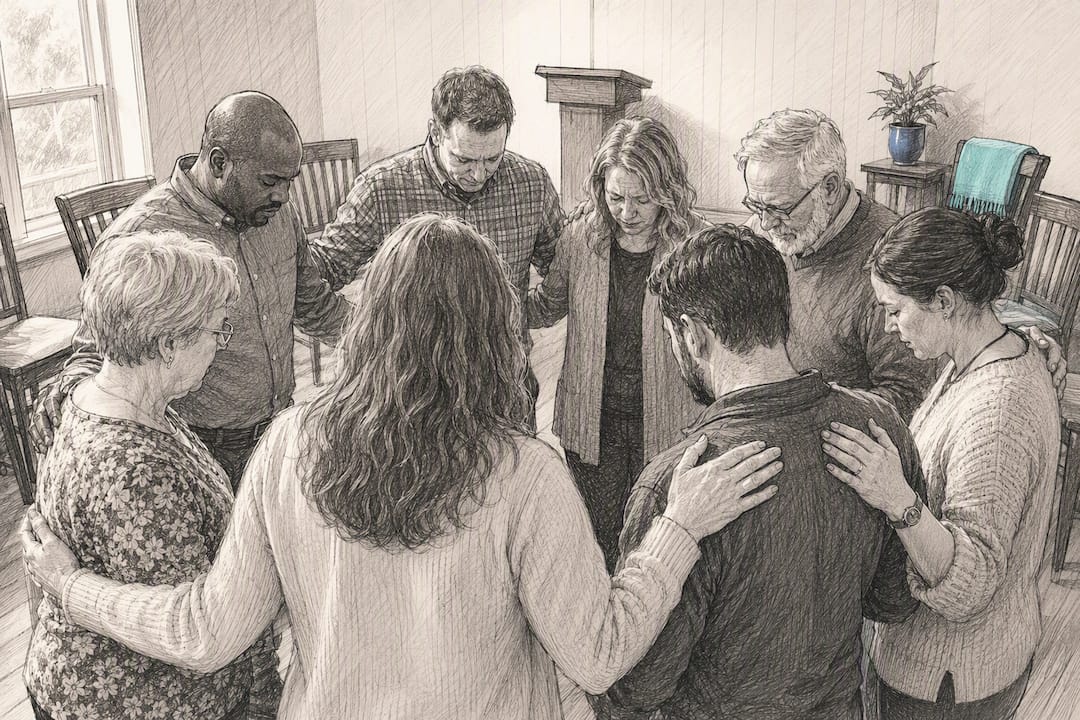
Public Scripture reading, done well by someone who has practiced it once, carries real weight. Circle prayer, where the congregation forms a loop and prays for the person next to them, works beautifully in a room of 20 to 40 people in a way it never could in an arena. Brief testimonies, two or three minutes from a congregation member about where they have seen God at work, ground the service in real lives rather than abstract themes.
Silence deserves more use than most small churches give it. A full minute of quiet after a hard sermon or before communion feels uncomfortable at first, but it gives people room to actually process instead of being swept immediately into the next song. Smaller congregations can lean into this kind of participatory, low-tech creativity precisely because intimacy is already built into the room.
None of this requires a bigger budget or a bigger team. It requires giving these elements the same planning attention you already give the music, slotting them intentionally into your service arc rather than treating them as filler between songs.
How Do You Evaluate and Improve Worship Services Over Time?
A five-minute debrief right after the service, while everything is still fresh, catches more useful feedback than any survey sent out three days later. Ask three questions every week: What worked? What felt off? What would we change if we ran this exact service again next Sunday?
Keep a simple running log, even a shared document, where you note transitions that felt clunky, a song that fell flat, or a cue that got missed. Patterns emerge fast. If the same transition confuses volunteers three weeks running, that is a run sheet problem, not a people problem.
Collect feedback from the congregation occasionally too, but keep it light. A quarterly conversation with a few trusted attendees, or a short comment card near the exit twice a year, surfaces things volunteers cannot see from the platform. Do not survey every week; it creates fatigue and makes people feel like test subjects instead of worshippers.
The goal is not perfection. It is a small, steady correction each month, the kind that compounds into a noticeably smoother service by the time a new season rolls around.
How Do You Adapt Worship Planning for Different Room Sizes?
A service built for 200 people does not automatically shrink to fit a room of 25, and forcing it to usually backfires. Smaller rooms amplify awkward silences, feedback squeals, and empty space in a way larger rooms absorb naturally.
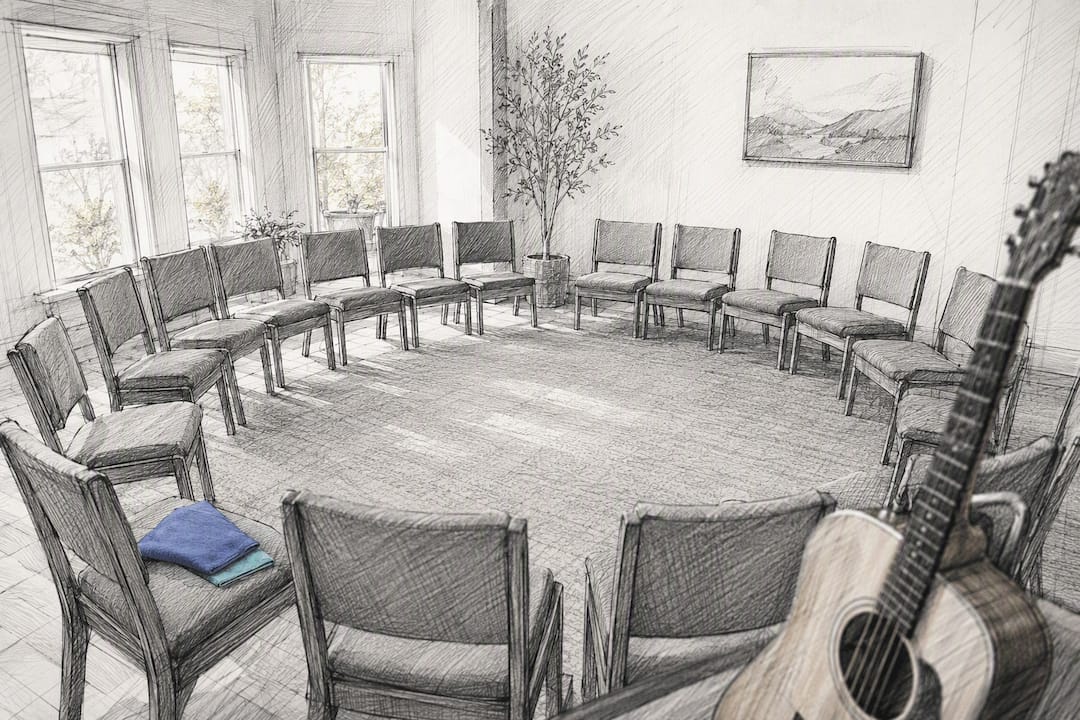
For a room under 50 people, drop the stage mentality entirely. Arrange chairs in a semicircle or U shape so the worship team feels like part of the congregation rather than performers facing an audience. Acoustic instruments often outperform amplified setups in small rooms; a single guitar and a couple of strong voices can fill a room that a full band would overwhelm.
For a room between 50 and 150, keep sound levels modest and resist the urge to add instruments just because you have the players. More instruments in a tight space usually means more volume conflict, not more excellence.
For anything larger, or for churches renting shared space with awkward acoustics, prioritize clear vocal miking over instrumental power, since intelligibility matters more than volume once a room gets echoey.
Space constraints also shape your response element. A tiny room with no center aisle makes communion logistics tricky; consider serving by row instead of having people walk forward. Plan around your actual room, not the room you wish you had.
How Should Small Churches Use Multimedia and Signage?
Simple, consistent visuals do more for a small church than flashy production ever will. Lyric slides should use a clean, high-contrast font, ideally the same template every week so the congregation is not adjusting to a new visual style on top of everything else happening in the service.
Signage matters more than most leaders assume. A clear sign pointing to the nursery, restrooms, or overflow seating reduces the quiet anxiety first-time visitors carry into an unfamiliar building. This costs almost nothing and pays off in how welcome people feel before the service even starts.
Keep multimedia in service of the words being sung or read, not as a distraction from them. Looping background videos behind lyrics can pull focus away from actual worship. A static, well-designed slide usually beats a busy animated one.
Presentation software should be boring in the best sense: reliable, consistent, and invisible when it is working correctly. Whatever presentation tool your team uses, keep the template consistent from week to week so volunteers running slides do not have to relearn a new layout every Sunday, and so the congregation's attention stays where it belongs.
A Practitioner's Take on Familiarity, Novelty, and Prayer
Given the choice between a beautiful new song the congregation has never heard and a familiar one they can sing without looking at the screen, familiarity wins almost every time in a small room. Congregational singing depends on confidence, and confidence depends on repetition.
None of this planning replaces prayer. A song list built with excellent logic but no time spent asking what God actually wants for that Sunday is still missing something. The best small-church worship planners hold their run sheets loosely and their prayer lives tightly.
— Editorial team
How Song7 Helps You Put This Plan Into Action
Song7 is built for exactly the kind of team this article describes: a handful of volunteers, limited rehearsal time, and a leader trying to keep everyone on the same page without chasing down texts and email attachments all week.
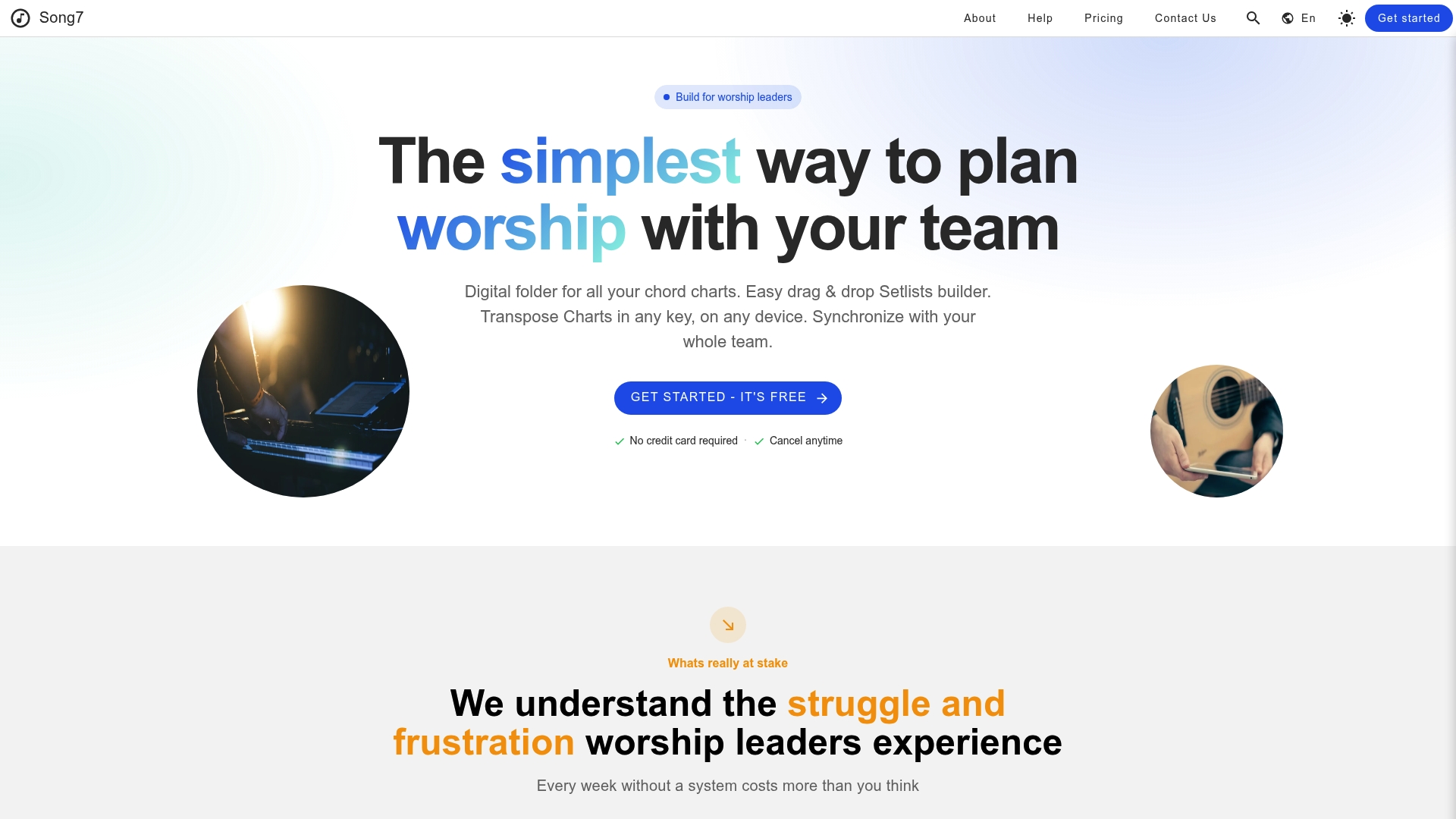
Three features speed up everything covered above. A drag-and-drop setlist builder lets you create shareable sets quickly instead of using scattered group chats. Real-time team synchronization means that when a song or key changes, all volunteers' devices update automatically, helping avoid rehearsing from outdated chord charts. Presentation mode provides clean, consistent lyric display without needing a separate slide program.
If you want to put this week's plan into motion, start a free trial at Song7 and build your next setlist in the time it takes to read one more chapter of your sermon text. You can also grab the Sunday Service Planning checklist from the blog to pair with your first rotation.
Sources
- 5 Guidelines for Leading Worship in a Smaller Church - Equip the Called
- Six Tips for Scheduling in a Small Church - WorshipTeamCoach
- Worship planning process | Calvin Institute of Christian Worship
- Where twenty or thirty are gathered | Reformed Worship
FAQ
What Are the 5 C's of Worship?
Definitions of the "5 C's" vary by tradition and source, so there is no single agreed-upon list. Rather than forcing a framework that shifts from church to church, focus on a clear service arc, a manageable song rotation, and consistent communication with your team.
What Is the 80% Rule for Churches?
This lines up closely with the revolving core approach of keeping around 60 songs in active rotation and introducing new songs sparingly.
What Are Some Creative Evangelism Ideas for Small Churches?
Small churches can use their size as an advantage through personal invitations to informal gatherings, community meals paired with short testimonies, and outdoor or public readings that lower the barrier for first-time visitors. Smaller congregations often reach people more effectively through relationship-driven, low-production events than through large-scale programming.
What Are Good Worship Activities for Small Groups?
Circle prayer, shared Scripture reading with discussion, a cappella singing, and brief personal testimonies all work well in small group settings without requiring instruments or technology. These participatory, low-tech formats tend to deepen engagement precisely because the group is small enough for everyone to take part.
How Do I Keep Volunteers From Burning Out?
Schedule volunteers one to three months in advance, build in intentional Sundays off, and watch for red flags like chronic lateness or declining energy. Predictable rotations and clear roles are the most reliable fix, and tools like Song7 can lighten the administrative load that often drives burnout in the first place.