
For volunteer-led churches, Song7 pairs with EasyWorship or OpenLP for the projection screen; production churches with livestreams need ProPresenter's NDI support; and zero-budget churches do well with OpenLP or VideoPsalm. Song7 is worth trialing first if your bottleneck is setlist chaos and last-minute song changes, not just what shows up on screen.
TL;DR:
- Song7 is ideal for volunteer worship teams needing real-time setlist and chord chart synchronization, especially when last-minute changes are common.
- ProPresenter is best suited for churches with complex production needs like LED walls and livestreams, requiring native NDI support and multi-layer compositing.
- Free options like OpenLP and VideoPsalm serve churches on tight budgets, focusing mainly on lyric projection without advanced features like cloud sync or NDI.
- Cloud-based tools such as Proclaim by Logos support multi-campus collaboration, with features like automatic service plan syncing and remote editing.
- Hardware requirements vary from minimal for browser-based tools like Song7 to demanding high-performance computers for multi-layer video production in ProPresenter or MediaShout.
Table of Contents
- What Is the Best Church Presentation Software for Your Team?
- How Do the Top Church Presentation Tools Compare?
- Mini-Reviews: What Each Church Presentation Tool Actually Does Well
- How Should You Choose Church Presentation Software?
- Why We Recommend Song7 for Worship Team Workflows
- Does Church Presentation Software Work With Your Existing Church Management System?
- Do Church Presentation Apps Work Well on Phones and Tablets?
- What Should Churches Know About Security and Data Privacy?
- What Hardware Do You Need to Run Church Presentation Software Smoothly?
- What's the Right Way to Pilot New Church Software?
- Try Song7 for Your Worship Team's Next Rehearsal
- Sources
- FAQ
What Is the Best Church Presentation Software for Your Team?
Choosing the best church presentation software starts with an honest question: what actually breaks on a Sunday morning? For most volunteer teams, it's not the slide transitions. It's the setlist that changed Saturday night, the chord chart nobody printed, or the volunteer who's never touched the projection laptop before.
Here's a shortlist worth trialing, based on church shape rather than feature count alone.
- Song7 — best for worship teams whose real pain point is setlist coordination, chord chart access, and keeping musicians synced before they ever get to the screen. Web-based, subscription model, real-time team sync.
- ProPresenter — best for churches running LED walls, multi-camera broadcasts, or OBS-based livestreams. Windows and macOS, subscription or one-time licensing depending on tier, native NDI output.
- EasyWorship — best for small to mid-sized Windows churches that want a simple, low-drama screen tool. One-time purchase available, minimal training curve.
- OpenLP — best for churches with no software budget at all. Free and open-source, cross-platform, no license fees ever.
- Proclaim by Logos — best for multi-staff churches needing cloud-based collaboration across campuses. Subscription, cloud-native, automatic sync.
- VideoPsalm — best for budget-conscious teams needing dependable lyric projection without the learning overhead of a full production suite.
If your team is three volunteers and a laptop, start with Song7 for the music side and EasyWorship or OpenLP for the screen. If you're already running a livestream pipeline, put ProPresenter at the top of your demo list.
How Do the Top Church Presentation Tools Compare?
The real differences between these platforms show up in five places: what device it runs on, how you pay, how many screens it can drive, whether your team can edit from home, and whether it plugs into a livestream chain. Independent comparisons consistently flag NDI support, layer compositing, and cloud sync as the decisive differences between production tools and volunteer-friendly ones.
| Software | Best for | Platform(s) | Price model | Multi-screen support | Cloud sync | NDI/livestream | Learning curve |
|---|---|---|---|---|---|---|---|
| Song7 | Worship-team setlist and sync workflows | Web (any browser) | Subscription | Presentation mode, single/dual output | Yes, real-time | No | Low |
| ProPresenter | Production and livestream churches | macOS, Windows | Subscription/one-time | Multiple layers and outputs | Limited | Native NDI | Moderate to high |
| Proclaim by Logos | Multi-campus, multi-staff teams | Web, Windows, macOS | Subscription | Multiple screens | Yes, automatic | Limited | Moderate |
| EasyWorship | Small Windows-based churches | Windows | One-time or subscription | Dual screen | No | No | Low |
| MediaShout | Cue-driven service flows | Windows, macOS | Subscription | Multiple screens | Limited | Limited | Moderate |
| OpenLP | Zero-budget lyric projection | Windows, macOS, Linux | Free | Dual screen | No | No | Low to moderate |
| Quelea | Free worship-focused projection | Windows, Linux | Free | Dual screen | No | No | Low to moderate |
| VideoPsalm | Free lyric-focused churches | Windows | Free | Single/dual output | No | No | Low |
| SlideDog | Mixed-media live playback | Windows | Subscription/free tier | Multiple screens | No | Limited | Moderate |
A few tradeoffs are easy to miss on a feature list. NDI matters only once you've committed to a broadcast pipeline; a church running a single sanctuary projector gains nothing from it and pays for complexity instead. Cloud sync sounds like a universal good, but for a single-campus volunteer team it mostly matters for keeping chord charts and setlists current between rehearsals, not for the screen output itself. That's the gap Song7 was built to fill: it treats setlist and chart sync as the primary job, and leaves screen output as a simpler presentation mode rather than a production suite.
The feature differences that vendor-comparison sites emphasize — platform support, output count, and collaboration tools — track closely with what actually determines a good fit: church size, technical staffing, and whether Sunday is one room or three.
Mini-Reviews: What Each Church Presentation Tool Actually Does Well
Song7 organizes the part of worship prep that usually lives in group texts and printed folders: setlists, chord charts, transposition, and a presentation mode that keeps lyrics and team sync in one place. It's a strong first trial for any team whose real complaint is "we didn't know the key changed" rather than "the slides look dated." Test it by building one full setlist with your actual song library and running presentation mode through a live rehearsal.
ProPresenter is the production standard for churches running LED walls or full broadcast setups. Its native NDI and multi-layer compositing give media teams control that simpler tools can't match, though the learning curve reflects that power. During a trial, test your actual capture card or NDI source end to end, not just the software in isolation.
Proclaim by Logos leans into cloud collaboration, letting multiple staff edit a service order remotely with automatic sync. Multi-campus churches and those with a media director working from home benefit most. Trial it by having two people edit the same service from different devices at once.
EasyWorship keeps things simple: a Windows-native tool built for a volunteer who's never run presentation software before. It won't do broadcast-grade compositing, but for a single-screen sanctuary it rarely needs to. Test the actual font files your team uses for lyric slides before committing.
MediaShout builds services around cues rather than individual slides, which suits churches with a defined run-of-show. It's worth testing if your bulletin follows a strict order every week.
OpenLP is free, open-source, and dependable for lyric projection. Its interface shows its age next to commercial tools, but the feature list rivals paid software for straightforward projection needs. Import a real song file during your trial to check formatting fidelity.
FreeShow and VideoPsalm both serve churches with no software budget. FreeShow handles general slideshow needs; VideoPsalm focuses specifically on lyric display. Neither replaces a full worship suite, but both beat printed lyric sheets.
Quelea and ZionWorx add worship-specific touches to the free-tool category, including song library management (ZionWorx) and customizable displays (Quelea). Test both with your actual song list before choosing between them.
SlideDog mixes live slides, video, and web content into one output stream, useful for churches that run announcement videos or web content mid-service.
Presenter by WorshipTools, Tithe.ly, ShareFaith Presenter, iWorship, OpenSong, Big Screen, Slipity, Song of Songs, iSpring Suite, and Worship Extreme round out the broader category, each covering some combination of lyric display, media management, or presentation design. Most fit smaller churches evaluating a free or low-cost option; check current platform support and pricing directly before scheduling a demo, since availability shifts more often for smaller tools in this group.
How Should You Choose Church Presentation Software?
Match the tool to your actual Sunday, not the demo reel. A pastor-vetted approach to shortlisting starts by segmenting churches into volunteer-run, mid-size with some staff, and full production, then matching software to that tier rather than chasing the "best" single product.
- Identify your church shape first. Volunteer-run, single-room churches want low training time above all else. Multi-campus or media-team churches need cloud sync and NDI. Know which one you are before you book a single demo.
- Ask vendors direct questions. Does it support NDI or only HDMI capture? Can two people edit the same service remotely? What formats can you import (ChordPro, PowerPoint, plain text)? What's the backup plan if the software or internet fails mid-service?
- Run a real trial, not a sandbox test. Load your actual song library, your actual fonts, and your actual projector or LED setup before deciding anything.
- Watch for red flags. Vendors who won't let you test with your own hardware, or who quote pricing only after a sales call, are worth a second look before you commit a budget line.
Pro Tip: Test the exact stage hardware you'll use live, whether that's a single projector or an LED wall feeding an NDI or capture card chain, since mismatches here cause most go-live surprises, not software bugs.
Why We Recommend Song7 for Worship Team Workflows
Song7 focuses on the part of worship prep that screen-first tools skip: setlists, chord charts, transposition, and keeping a volunteer band in sync before Sunday even starts. Its real-time sync means a key change made Thursday shows up for every musician instantly, not in a group text someone missed. To pilot it, build one Sunday's setlist from your existing library, assign roles, and run presentation mode through a full rehearsal to see how sync holds up live.
Does Church Presentation Software Work With Your Existing Church Management System?
Most churches already run a church management system (ChMS) for giving, attendance, and scheduling, separate from whatever drives the sanctuary screen. Compatibility here usually means import and export flexibility, not a deep two-way integration.
ProPresenter and Proclaim both support importing service plans and song data from common formats, and Proclaim's cloud sync makes it a natural fit if your ChMS already lives in the browser. EasyWorship and OpenLP handle standard import formats like ChordPro and plain text but don't typically integrate directly with scheduling or giving platforms.
Song7 approaches this from the music side: it imports songs from ChordPro, text, or even photos of existing chord charts, so a team migrating from paper folders or another song database doesn't lose their library in the switch. That import flexibility matters more in practice than a marketed "integration," since most volunteer teams are consolidating scattered files, not syncing two enterprise systems.
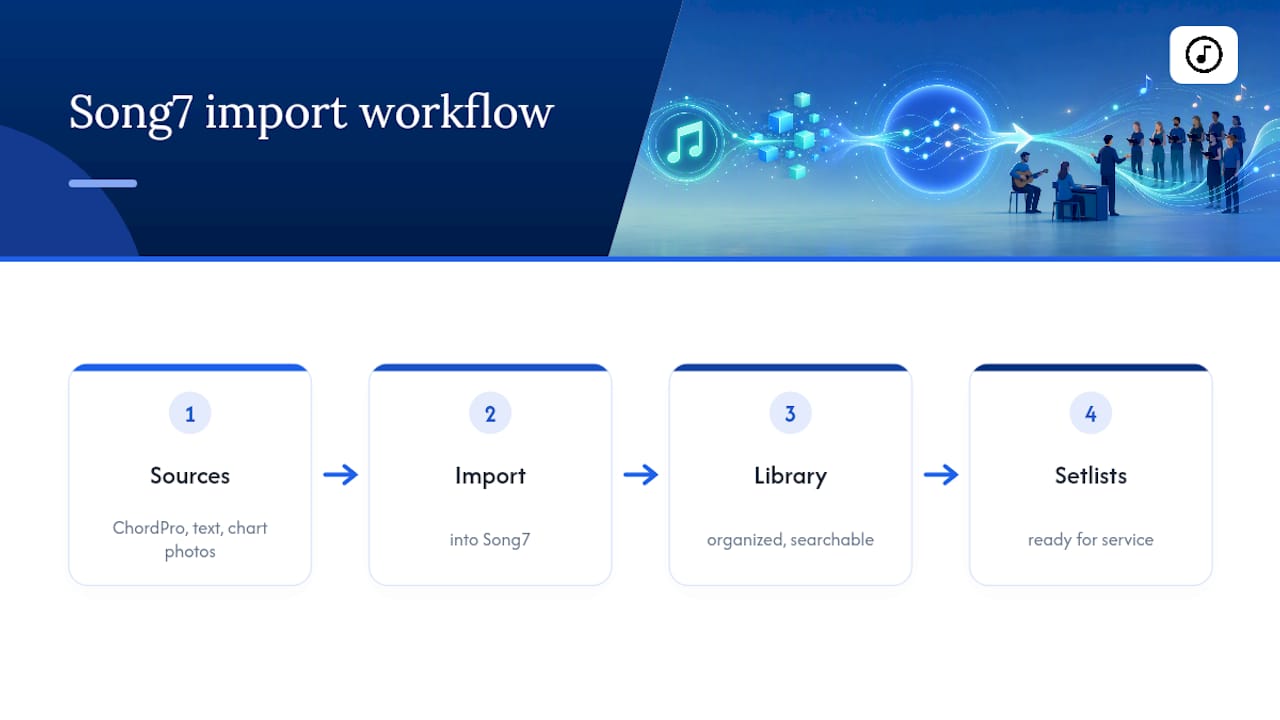
Before committing to any tool, export a sample of your current song data and try importing it during the trial. If a vendor can't show you a clean import of your real files, that's a better signal than anything on a features page.
Do Church Presentation Apps Work Well on Phones and Tablets?
Mobile support varies more than most feature comparisons let on. Some tools treat mobile as a full remote control; others barely support it.
ProPresenter offers a companion remote app for stage displays and basic control, useful for a worship leader who wants confidence monitor access without a dedicated laptop. Proclaim's cloud-native design extends naturally to tablets and phones since the whole platform lives in a browser. EasyWorship and MediaShout are primarily desktop tools with limited mobile functionality, which can be a real constraint for a rotating team of volunteers who'd rather check a setlist on their phone than boot up a laptop.
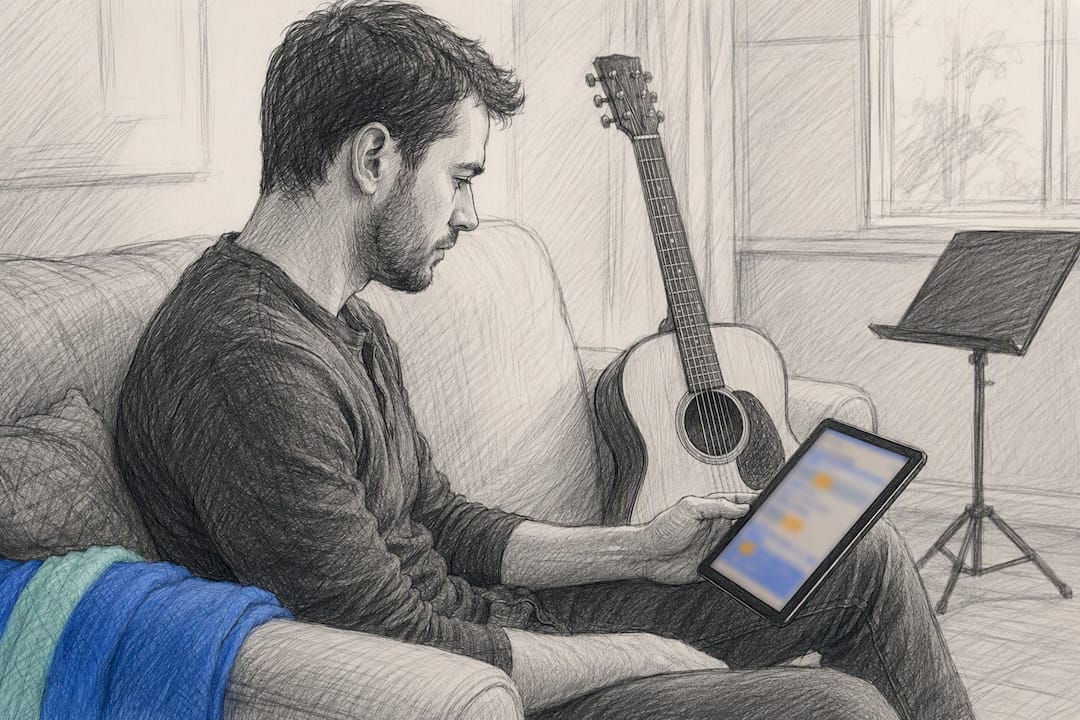
Song7 is built web-first, which means setlists, chord charts, and transposition are accessible from any phone or tablet a volunteer already owns. That matters most in rehearsal, when a guitarist wants to check a chord chart from the couch rather than emailing themselves a PDF.
Free and open-source tools like OpenLP, Quelea, and VideoPsalm generally lag here. They are built as desktop projection software first, and mobile companion features, when they exist, tend to be minimal.
What Should Churches Know About Security and Data Privacy?
Church software handles more sensitive data than it looks like on the surface: member schedules, contact information for volunteers, and sometimes giving records if a ChMS integration is involved.
Cloud-based platforms like Song7 and Proclaim by Logos store data on remote servers with account-based access control, which means losing a laptop doesn't mean losing your song library or setlists. Desktop-first tools like EasyWorship and OpenLP keep data locally by default, which some churches prefer for full control but which also means a failed hard drive can wipe years of chord charts without a cloud backup in place.
Ask any vendor directly how account access is managed for volunteer teams. Volunteer turnover is constant in most churches, and a platform with real user roles, not just one shared login, makes it far easier to remove access when someone moves on without resetting passwords for the whole team.
For churches handling any donor or member data through connected systems, confirm whether the vendor encrypts data in transit and at rest, and whether they publish a privacy policy you can actually read. A vendor that's vague on this in a sales call is worth pressing harder on before signup.
What Hardware Do You Need to Run Church Presentation Software Smoothly?
Hardware requirements split sharply between browser-based tools and full production suites, and mismatched expectations here cause more Sunday-morning stress than software bugs do.
Song7 and Proclaim run in a browser, so the real requirement is a stable internet connection and a device from the last several years. No dedicated presentation computer is required, which lowers the barrier for a church running everything off a shared laptop.
ProPresenter and MediaShout are heavier. Multi-layer compositing, video backgrounds, and NDI output all demand a dedicated computer with a solid graphics card, not the church office laptop that also handles bulletins. If you're feeding an LED wall or running a livestream simultaneously, budget for hardware that can handle both loads without dropping frames.
OpenLP, Quelea, and VideoPsalm run comfortably on modest, older hardware, which is part of why they remain popular with churches stretching a tight budget. The tradeoff is fewer visual effects and, in most cases, no NDI output at all.
Whatever you choose, test on the actual machine that will run the service, not a newer laptop borrowed for the demo. A tool that runs fine on a demo unit can stutter on the five-year-old desktop tucked in the sound booth.
What's the Right Way to Pilot New Church Software?
Run a one-week pilot before committing. Assign your worship leader to build the setlist and a volunteer operator to run it live, then track cue reliability, volunteer confidence, and rehearsal time saved. If the pilot goes smoothly and your needs stay simple, stick with the volunteer-friendly tool. If you're outgrowing it toward broadcast or multi-campus needs, that's your signal to move toward production-grade software.
— Editorial team
Try Song7 for Your Worship Team's Next Rehearsal
Some worship team software alternatives help manage group texts, chord charts, and last-minute setlist changes. These tools focus on setlist and band coordination, offering real-time sync on chord charts, transposition, and presentation mode designed to be accessible to volunteer-led teams.
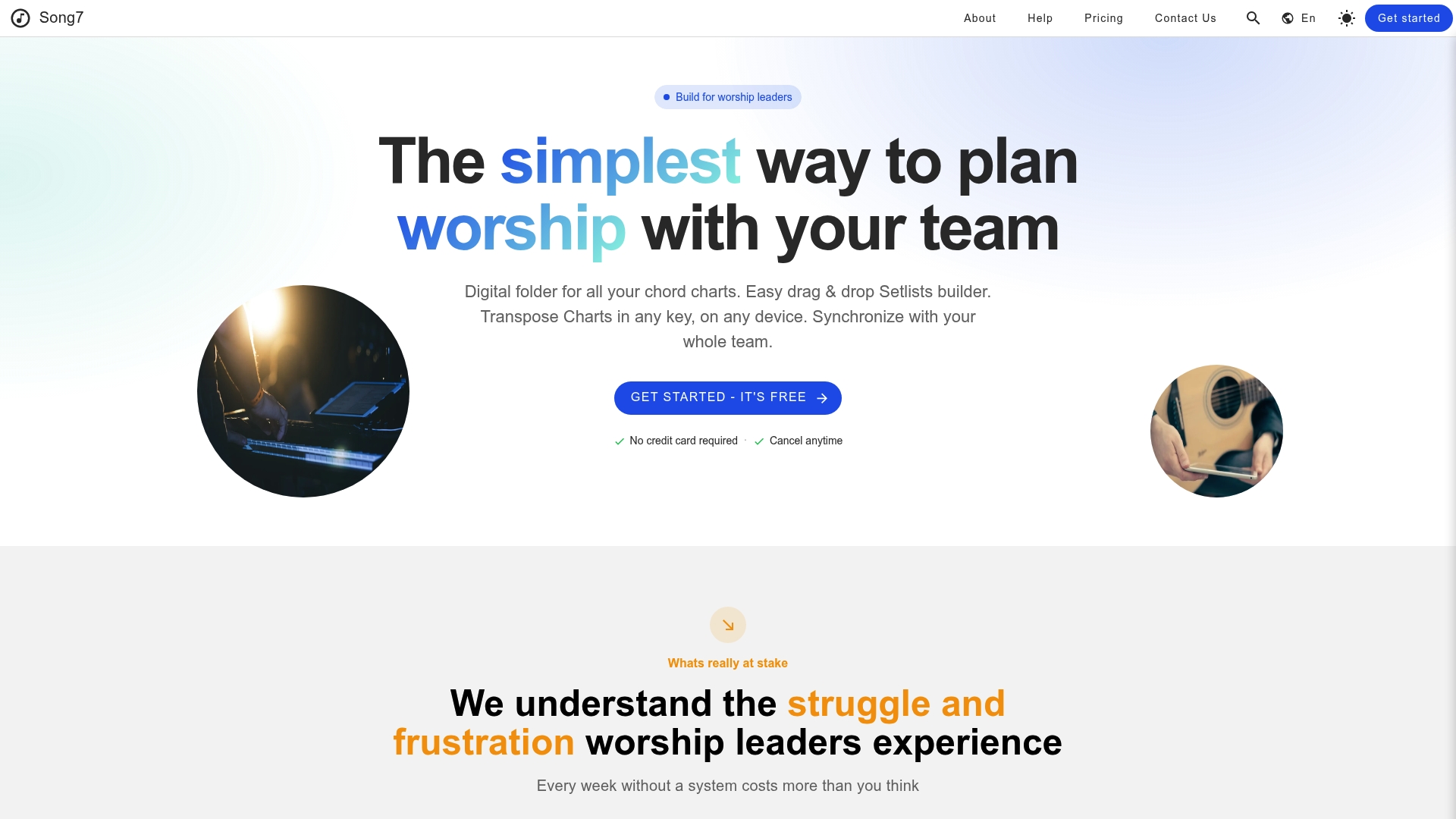
If your Sundays run on a small volunteer team and the real friction is coordination rather than graphics, Song7 is built for exactly that. Build your first setlist, invite your team, and run it through one live rehearsal to see how the sync holds up. You can also explore Song7's setlist builder and worship tools at Song7 to see how the platform supports team-wide song management. Start a trial today and test it against your actual Sunday, not a demo script.
Sources
- Best Free Church Presentation Software Solutions 2026 — Capterra
- Proclaim vs ProPresenter comparison — Software Advice
FAQ
What Presentation Software Do Most Churches Use?
Churches commonly use ProPresenter for production-heavy services, EasyWorship for volunteer-run Windows churches, and Proclaim by Logos for multi-campus teams needing cloud sync. Song7 is increasingly used alongside these for setlist and chord chart coordination rather than screen output alone.
How Much Does ProPresenter Cost for a Church?
ProPresenter pricing depends on the tier and licensing option a church chooses, with both subscription and one-time purchase paths available. Check current pricing directly with the vendor, since tiers and bundles change.
What Is the Best Free Church Presentation Software?
OpenLP is the most widely recommended free option, offering cross-platform support and dependable lyric projection without licensing fees, as noted in Capterra's free tools roundup. Quelea and VideoPsalm are strong free alternatives if OpenLP's interface doesn't fit your team.
Is ProPresenter or EasyWorship Better for My Church?
ProPresenter fits churches running LED walls, livestreams, or multi-layer video compositing, since it includes native NDI support that EasyWorship lacks. EasyWorship suits smaller, volunteer-run churches that want simple, reliable projection without a steep learning curve.
Does Song7 Replace My Screen Presentation Software?
Song7 focuses on setlists, chord charts, and team sync rather than replacing your projection tool entirely. Most worship teams pair it with a screen tool like EasyWorship or OpenLP, using Song7 to keep the band coordinated before the service even starts.