
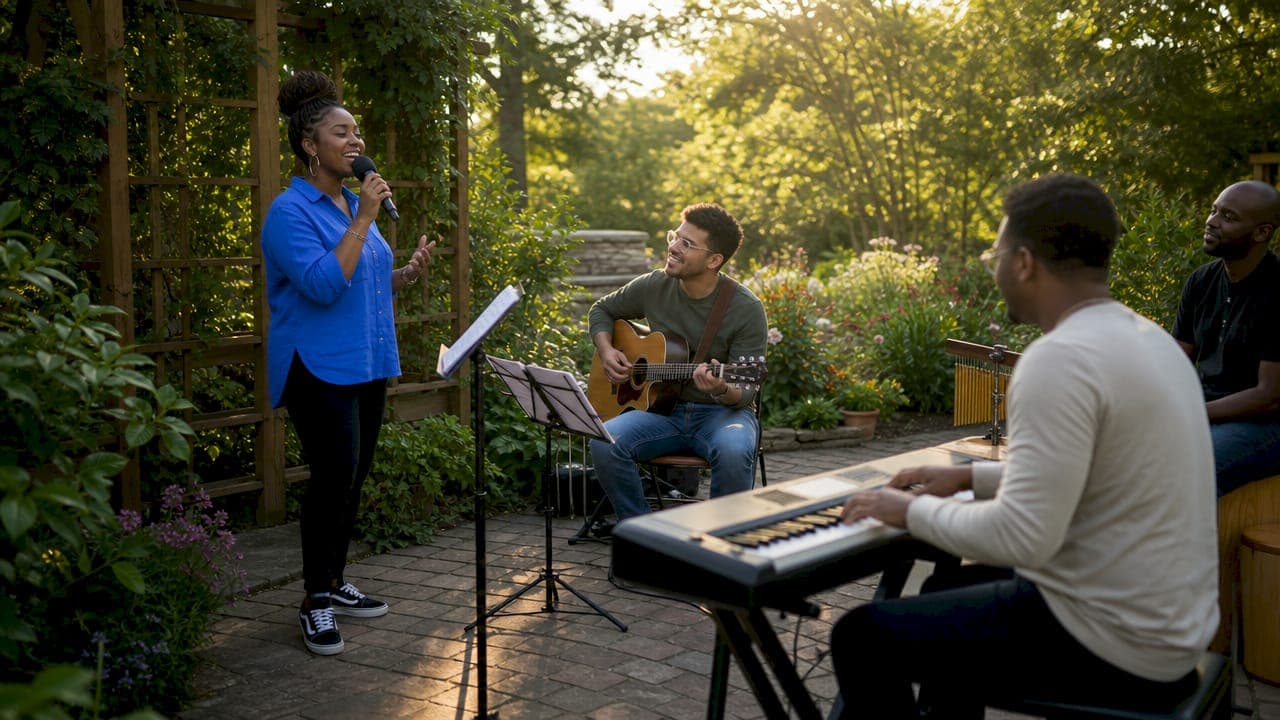
Worship team roles are defined positions within a church music ministry, each carrying specific responsibilities that contribute to a unified worship experience. The best examples of worship team roles span leadership, musicianship, technical production, and support functions. Together, these positions form a structure that keeps services running smoothly and spiritually focused. Whether you lead a team of five or fifty, knowing what each role does makes the difference between a group of talented individuals and a ministry that moves as one.
1. What are common examples of worship team roles in leadership?
The worship leader is the most visible role on any team. This person carries both musical and spiritual authority, guiding the congregation through song, Scripture, and spoken transitions. Typical worship leader tasks include selecting songs, leading rehearsals, coordinating with the pastor on service themes, and modeling spiritual engagement from the platform.
Below the worship leader, a music director or coordinator handles the operational side of ministry. This role covers scheduling, song preparation, training newer musicians, and managing the team calendar. Churches increasingly use a team-based, flat leadership structure where an elder board oversees co-equal directors. That structure distributes authority rather than concentrating it in one person, which reduces bottlenecks and burnout.
Section leads are a practical extension of this hierarchy. A vocal section lead mentors backup singers, while an instrumental section lead coaches guitarists or keyboardists. These roles sit between the music director and individual team members, creating a clear worship team hierarchy without requiring the worship leader to manage every detail personally.
- Worship leader: Spiritual and musical direction, congregational engagement, service flow
- Music director/coordinator: Scheduling, training, song selection support, rehearsal planning
- Section leads: Mentoring, skill development, role-specific communication
- Elder board oversight: Governance, accountability, alignment with church vision
Pro Tip: Identify two or three team members with leadership potential and invest in them specifically. Healthy worship leaders prevent burnout by distributing leadership among key people who then lead others.
2. What are typical musician and vocalist roles in worship teams?
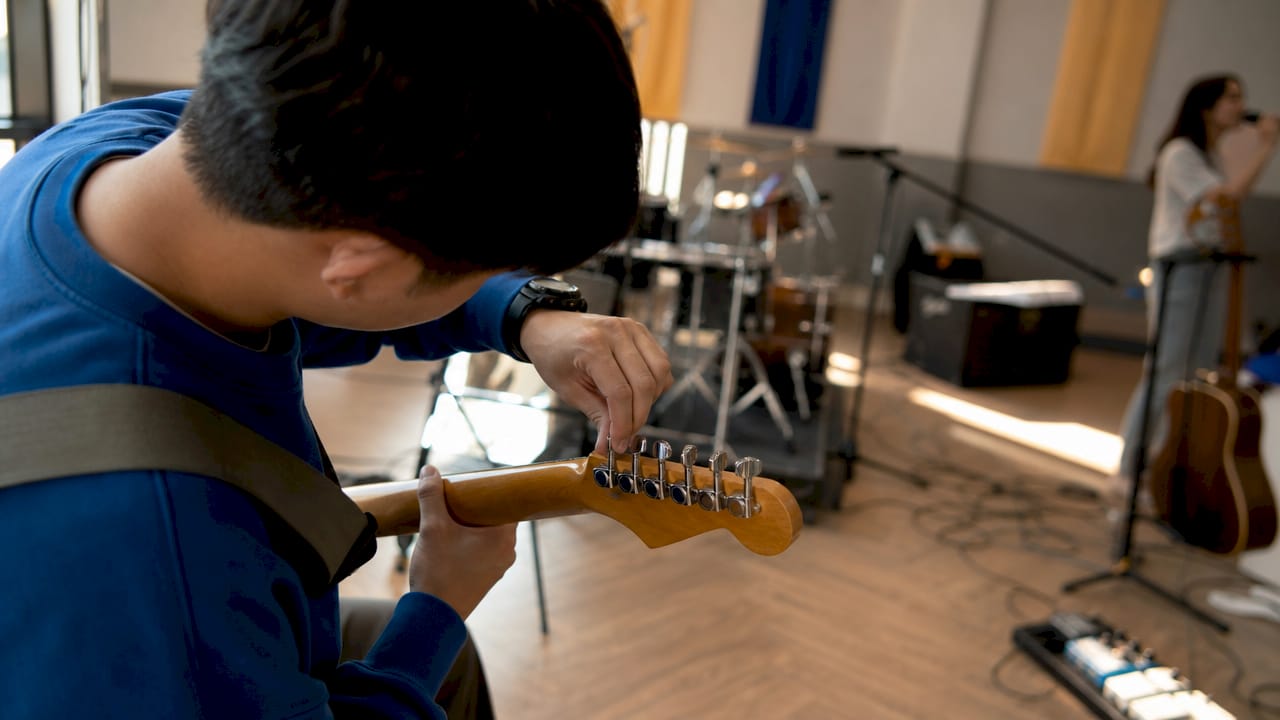
Instrumentalists form the musical backbone of any worship band. The types of worship instrument roles most commonly found in church bands include electric guitar, acoustic guitar, bass guitar, keys or piano, and drums. Larger teams may add strings, brass, or auxiliary percussion. Each player is responsible for learning assigned songs before rehearsal, not just during it. One hour of personal practice weekly on assigned songs is a widely recognized standard for maintaining team readiness.
The role of vocalists in a worship band is equally defined. Lead vocalists carry the melody and often share platform leadership with the worship leader. Harmony singers support the lead with upper or lower vocal parts, filling out the sound and helping the congregation find their pitch. Backup vocalists add texture and energy, particularly during high-energy moments in a set.
Vocal roles vary by church size and style. A small church may have one lead vocalist who also leads worship. A larger church may roster six to eight vocalists across multiple services, rotating them 1–2 times per month based on service needs and availability. That rotation prevents fatigue and keeps the team fresh.
- Lead vocalist: Carries the melody, engages the congregation, often shares platform leadership
- Harmony singers: Provide upper and lower vocal support, strengthen congregational singing
- Backup vocalists: Add texture, energy, and coverage during full-band moments
- Electric guitarist: Drives dynamics, fills, and tonal color
- Acoustic guitarist: Provides rhythmic foundation and chord structure
- Bassist: Locks in with the drummer to anchor the groove
- Keyboardist/pianist: Fills harmonic space, supports transitions, often doubles as arranger
- Drummer: Sets tempo, controls energy, and cues dynamic shifts
Pro Tip: Assign specific songs to specific musicians at least one week before rehearsal. Teams that arrive prepared spend rehearsal time on arrangement and feel, not on learning basic parts.
3. Which technical and production roles support worship teams?
Technical roles are not optional extras. They are core positions that determine whether the congregation hears and sees the worship clearly. The sound engineer or audio technician manages the mixing board, monitors, and front-of-house levels during rehearsal and the live service. A poorly mixed service undercuts even the most prepared worship team.
The projection operator manages lyrics, Scripture references, and media on screen. This role requires attention to detail and the ability to follow the service flow in real time. One missed slide or late lyric can break a congregation's focus. Lighting technicians control the visual atmosphere of the room, adjusting intensity and color to match the tone of each song or moment.
Broadcast and video team members handle livestreaming, recording, and camera operation for churches that serve online audiences. A central planning hub that includes flowsheets, song lists, and cues reduces last-minute chaos for all technical roles. When production teams receive the same information as musicians, services run with far fewer surprises.
- Sound engineer/audio tech: Mixing, monitor levels, front-of-house sound quality
- Projection operator: Lyrics, Scripture, media, and announcement slides
- Lighting technician: Room atmosphere, color, and intensity control
- Broadcast/video team: Livestream, recording, and camera operation
Pro Tip: Include your sound engineer in the song selection conversation. Knowing the key, tempo, and arrangement of each song before Sunday gives them time to build a proper mix template.
4. How do support roles and volunteers enhance worship team effectiveness?
Support roles complete the worship team picture. Prayer leaders open or close services with focused intercession, setting a spiritual tone that musicians alone cannot establish. Scripture readers bring the Word directly into the service flow, often bridging musical sets with spoken truth. Common volunteer roles include worship team member, Scripture reader, and prayer leader, and assigning youth and volunteers to these positions develops skills like public speaking and teamwork.
Administrative roles keep the team organized behind the scenes. A team scheduler manages the rotation calendar, confirms availability, and communicates changes. A communication coordinator sends weekly reminders, shares song lists, and relays any updates from the worship leader. These roles are often filled by volunteers, but they carry real weight. Without them, last-minute confusion becomes the norm.
Setup and hospitality volunteers handle the physical environment before and after services. They arrange chairs, set up instrument stations, and ensure the platform is ready before the team arrives. Delegation based on spiritual gifts such as teaching, servanthood, and leadership improves team function well beyond musical skill alone. When every person knows their assignment, the team operates with confidence.
- Prayer leader: Opens or closes services with intercession, sets spiritual atmosphere
- Scripture reader: Bridges musical sets with spoken Scripture, adds liturgical depth
- Team scheduler: Manages rotation calendar, confirms availability, handles substitutions
- Communication coordinator: Sends reminders, shares song lists, relays updates
- Setup volunteers: Prepare the platform, arrange equipment, support team logistics
Key Takeaways
A well-structured worship team assigns every person a clear role, from the worship leader to the setup volunteer, so that each service runs with purpose and spiritual focus.
| Point | Details |
|---|---|
| Leadership roles set direction | The worship leader and music director carry spiritual and operational responsibility for the whole team. |
| Musician roles require preparation | Instrumentalists and vocalists should practice assigned songs at least one hour per week before rehearsal. |
| Technical roles are core, not optional | Sound engineers, projection operators, and lighting techs directly shape what the congregation experiences. |
| Support roles complete the team | Prayer leaders, schedulers, and volunteers fill gaps that musicians and technicians cannot cover alone. |
| Delegation prevents burnout | Distributing leadership to section leads and key volunteers keeps the team healthy and sustainable long-term. |
Why role clarity changed how I lead worship
The biggest mistake I made early in worship ministry was treating the team as a collection of musicians rather than a structured ministry. I assumed everyone understood their responsibilities because the roles seemed obvious. They were not obvious. The guitarist thought the bassist set the tempo. The projection operator did not know the song order until Sunday morning. The result was a team that worked hard but never quite pulled together.
What changed everything was writing down every role and its specific expectations. Not a long document. A single page. When each person could see their position in the team and how it connected to everyone else's, the dynamic shifted. Musicians in 1 Chronicles 25 served in order and unity, carrying responsibility beyond performance. That biblical model is not just inspiring. It is practical. Skilled people serving within a clear structure produce something greater than the sum of their parts.
The other lesson I learned the hard way: you cannot personally disciple every team member. The sustainable model is to invest deeply in two or three key leaders who then develop others. That approach scales. It also protects you from the kind of exhaustion that ends ministries prematurely. Build the structure, train the leaders, and let the structure do the work.
— Henning
Song7 keeps your worship team organized and ready
Coordinating multiple roles across a worship team takes more than a group chat and a printed song list. Song7 is built specifically for worship leaders and church music teams who want every person prepared and on the same page before Sunday arrives.
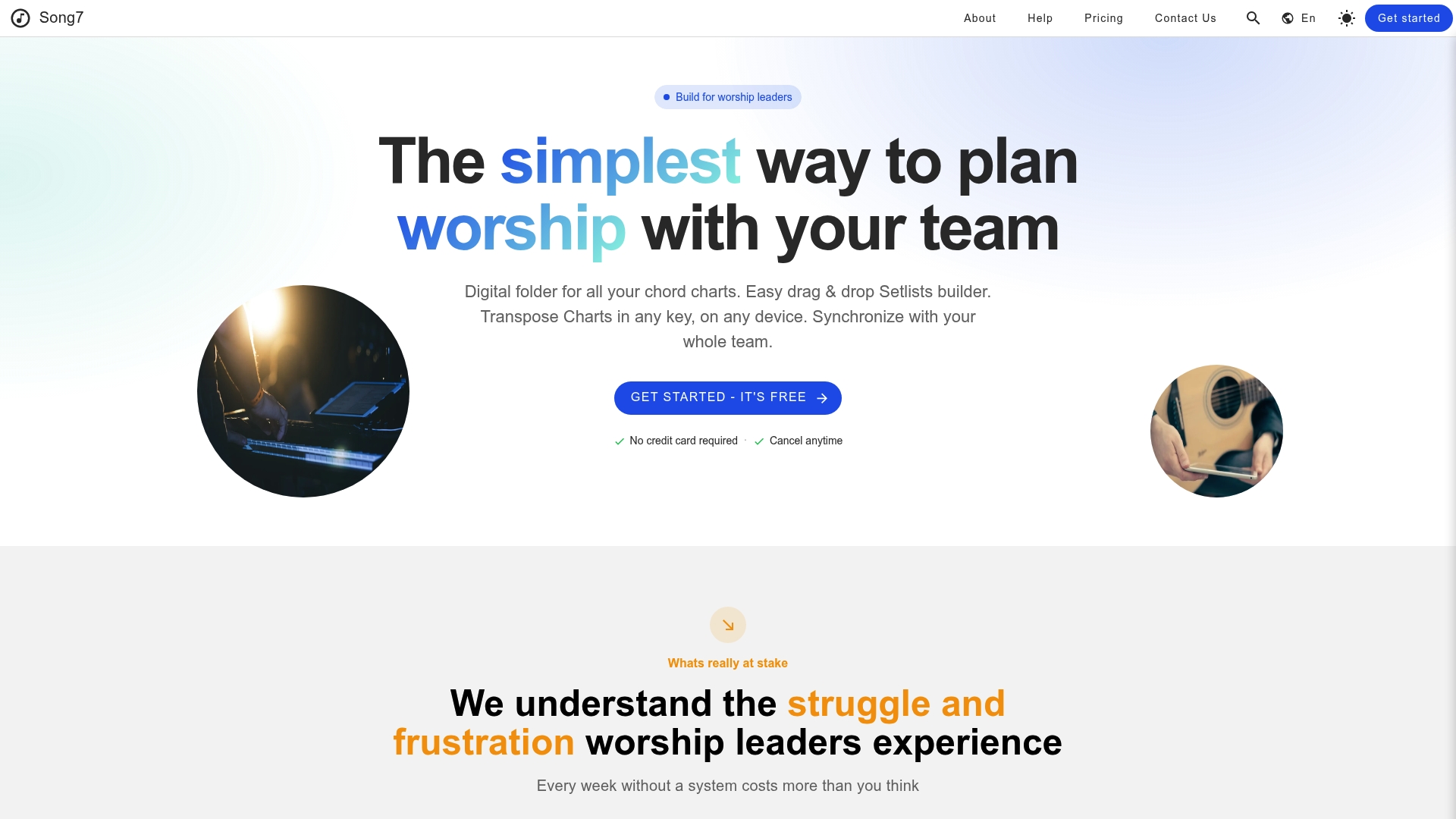
With Song7, you can build and share setlists, attach chord charts, transpose songs on the fly, and sync updates to every team member in real time. The platform gives your sound engineer, vocalists, and instrumentalists one central place to find everything they need. No more last-minute texts, missing charts, or version confusion. Try Song7 today and give your team the clarity they need to lead worship with confidence.
FAQ
What are the main roles in a worship team?
The core worship team positions include worship leader, instrumentalists (guitar, bass, keys, drums), vocalists, sound engineer, and projection operator. Support roles such as prayer leader, scheduler, and setup volunteers complete a fully functioning team.
How often should worship team members serve?
Healthy worship teams schedule members 1–2 times per month based on service needs and volunteer availability. Regular rotation prevents fatigue and keeps the team engaged.
What does a worship leader actually do?
A worship leader provides spiritual and musical direction for the congregation, selects songs, leads rehearsals, and coordinates with the pastor on service themes. The role combines platform leadership with behind-the-scenes planning.
How do technical roles fit into a worship team?
Sound engineers, projection operators, and lighting technicians are full members of the worship team, not contractors. They require the same advance information as musicians to prepare effectively for each service.
How do you structure a worship team hierarchy?
A practical worship team hierarchy places the worship leader at the top, supported by a music director or coordinator, then section leads for vocals and instruments, and finally individual team members and volunteers. Team-based church structures often add elder board oversight above the worship leader for accountability.